You hear the term all the time. "AI is causing a paradigm shift." "Streaming created a paradigm shift in entertainment." It sounds impressive, a bit academic, and frankly, overused. But here's the problem most articles don't address: if you misunderstand what a real paradigm shift is, you'll waste resources chasing fads or, worse, miss the tectonic plate moving beneath your industry until it's too late. I've seen it happen to smart people. A client of mine, a sharp retail executive, spent years optimizing his supply chain for brick-and-mortar efficiency, dismissing e-commerce as a "niche channel for geeks." He was solving yesterday's problem perfectly while the ground shifted. That's the cost of missing a paradigm shift.
So, let's cut through the buzzword. A paradigm shift isn't just a big change or a new technology. It's a fundamental change in the basic assumptions, the foundational rules of the game, within a scientific discipline or an entire industry. It's when the old rulebook is thrown out, and a new one, based on completely different principles, is written. Your existing mental model becomes not just inadequate, but actively misleading.
What You'll Learn Today
From Science to Your Bottom Line: What a Paradigm Shift Really Means
The term was coined by physicist and philosopher Thomas Kuhn in his 1962 book The Structure of Scientific Revolutions. He wasn't talking about business. He was analyzing why science doesn't progress in a smooth, linear line. Instead, it goes through long periods of "normal science"—where everyone works within an accepted framework, like Newtonian physics—punctuated by revolutionary crises that force a completely new framework, like Einstein's theory of relativity.
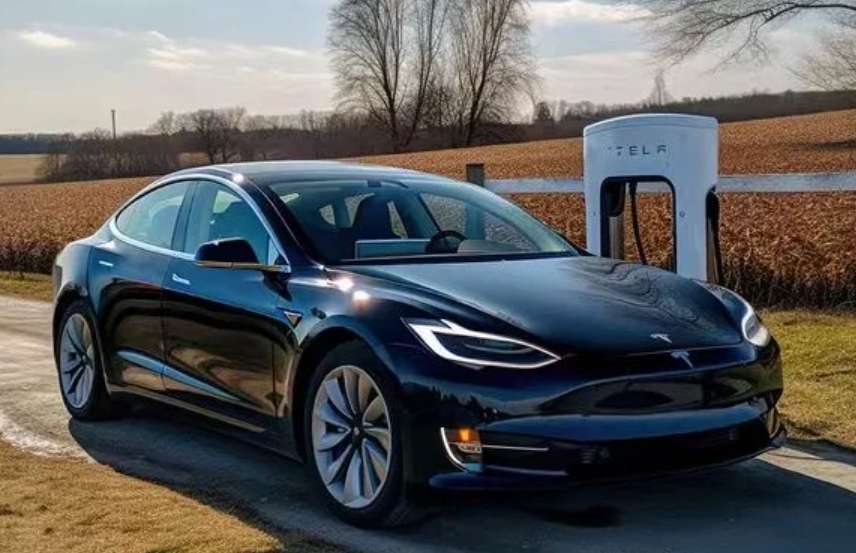
The business parallel is exact. Think of the automotive industry operating under the "normal science" of internal combustion engines for nearly a century. The rules were about horsepower, torque, and fuel efficiency within that framework. Then comes the electric vehicle (EV) paradigm. Suddenly, the core components (batteries, software, electric motors), the performance metrics (instant torque, range, charging speed), the infrastructure (charging stations vs. gas stations), and even the business model (direct sales, over-the-air updates) are fundamentally different. It's not a better car; it's a different category of product defined by new rules.
Kuhn's Framework in Your Boardroom
Kuhn identified stages that map eerily well to market disruptions:
1. Normal Science (The Status Quo): Your industry has established models, best practices, and key performance indicators. Everyone competes on the same playing field. For decades, television meant scheduled programming on networks and cable.
2. Anomalies Appear (The Cracks): Things start happening that the old model can't easily explain. Netflix's mail-order DVD service was an anomaly. Then its streaming for existing TV shows was another. The old model said, "Content is king, and we control the pipes." Yet, here was a company with no original content and no broadcast license gaining subscribers. The industry largely dismissed it or tried to fit it into the old model (licensing content to Netflix was seen as easy money).
3. Crisis (The Rules Break): The anomalies pile up, and the old framework becomes cumbersome. Consumers cord-cut. "Binge-watching" becomes a term. The old KPI of nightly ratings feels less relevant. A crisis of confidence in the old way sets in.
4. Revolution (The Shift): A new framework emerges that elegantly explains the anomalies and opens new possibilities. The paradigm shifts from appointment viewing to on-demand entertainment. The new rules are about algorithms, entire season drops, global simultaneous releases, and data-driven content creation. Once Netflix produced House of Cards, the revolution was undeniable. The old players were now playing a new game they didn't design.
How to Identify a Paradigm Shift Before It's Too Late
This is where you move from theory to practice. Most leaders look for new products. You need to look for new rules. Here’s a filter I use in my own analysis and consulting work.
It Redefines "Value": In the old paradigm of software, value was in the perpetual license—a big upfront sale. The paradigm shift to Software-as-a-Service (SaaS) redefined value as an ongoing relationship, continuous updates, and scalability. The fundamental economic unit changed from a product to a service.
It Makes Existing Expertise Obsolete: When digital photography emerged, the immense expertise in chemical film processing, a core competency of giants like Kodak, became a liability, not an asset. Their knowledge was rooted in the dying paradigm. Similarly, a master of traditional advertising metrics might struggle to grasp the attribution models of performance marketing.
It Creates New Winners from the Periphery: Paradigm shifts are rarely led by the dominant incumbents. They have too much invested in the old way. The winners are often newcomers or companies from adjacent industries. Apple (a computer company) led the smartphone shift. Airbnb (a website) redefined hospitality logistics without owning property.
Paradigm Shift Examples That Reshaped Our World
Let's look beyond business to see the pattern clearly.
The Copernican Revolution: The Ultimate Shift
Before Copernicus, the dominant paradigm (the Ptolemaic model) placed Earth at the center of the universe. It was complex, requiring elaborate "epicycles" to explain planetary motions. Copernicus proposed a heliocentric model. This wasn't just "moving the goalposts"; it required throwing out the fundamental assumption of humanity's central place in the cosmos. It took over a century to be accepted because it demanded a complete restructuring of astronomy, physics, and even theology.
From Mainframes to Personal Computing
The computing paradigm was centralized: powerful, expensive mainframes accessed by terminals. Value was measured in processing power per dollar for large institutions. The PC shift decentralized computing. The new rules were about user-friendly interfaces, individual productivity software, and affordability. IBM, the king of mainframes, initially dismissed the PC as a toy. Microsoft and Intel, playing by the new rules, became the giants of the new era.
I remember buying my first PC in the late 90s. The feeling wasn't just having a tool; it was having a personal portal to information and creation, something the mainframe model could never offer. That feeling—of a fundamental change in access and agency—is a hallmark of a true shift.
The On-Demand Economy vs. Traditional Ownership
The old paradigm: ownership equals access and status. You buy a car, a DVD, a music album. The shift, powered by connectivity and platforms, is toward access over ownership. The rules changed from asset-heavy models (inventory, retail space) to asset-light, platform-based models leveraging underutilized capacity (Uber, Spotify, Netflix). Success is now about network effects, liquidity in two-sided markets, and user experience, not just inventory management.
Action Plan: Surviving and Thriving Through a Paradigm Shift
Knowing what it is isn't enough. You need a plan. This isn't about panic; it's about structured vigilance.
1. Audit Your Assumptions: Regularly list the foundational beliefs of your industry. "Customers will always want to test drive a car." "Banking requires physical branches for trust." "Software is sold, not rented." Stress-test each one. Which are being gently eroded? Which could shatter?
2. Listen to the Fringe: Pay disproportionate attention to startups, academic research, and customer behaviors that seem irrational within your current model. They are the anomalies. Don't dismiss them because they have small market share today. Assess if they are playing by a new, coherent set of rules.
3. Run a "Dual-Track" Experiment: You can't abandon your core business, but you can't ignore the potential shift. Allocate a small, autonomous team (with different incentives) to explore the new paradigm. Google did this with Android while its search business thrived. The goal is learning, not immediate profit.
4. Focus on the Job-to-be-Done: Paradigms change, but fundamental human needs often don't. People didn't want a faster horse; they wanted faster, more convenient personal transportation. Blockbuster focused on renting DVDs. Netflix focused on delivering convenient entertainment and relaxation. Zoom in on the core job your customer is hiring your product to do. A new paradigm might fulfill that job in a radically better way.
I advised a publishing company that saw digital as just another format for books. They were wrong. The paradigm shift was from selling static content to facilitating learning journeys—which could include audio, community, interactive quizzes, and coaching. They had to stop thinking like book sellers and start thinking like learning outcome providers.
Your Burning Questions Answered
The paradigm shift isn't a distant academic concept. It's the force that quietly devalues billion-dollar companies and creates new empires. It asks a brutal question: are you perfecting a model that the world is about to abandon? By understanding its true nature—a change in the foundational rules, not just the tools—you move from being a victim of change to an observer, and potentially, an architect of what comes next. Start by questioning one core assumption in your field today. That's where the insight begins.

Leave a Comment